
What Is a Vacation Home – Key Insights for Buyers
Most American families dream of owning a vacation home, yet many believe it is a luxury reserved for the wealthy. In reality, over one third of American buyers consider alternative ownership models like shared and fractional ownership to make vacation properties accessible. Understanding what truly defines a vacation home, along with the facts versus myths of ownership, can help you find an option that matches your goals while avoiding common pitfalls.
Table of Contents
- Vacation Homes Defined And Common Misconceptions
- Types Of Vacation Homes And Their Uses
- Key Features And Customization Options
- Legal Requirements And Permitting In Central Europe
- Costs, Maintenance, And Tax Implications
Key Takeaways
| Point | Details |
|---|---|
| Understanding Vacation Homes | Vacation homes are secondary properties designed for recreational use, varying from cabins to urban apartments, and can offer rental income potential. |
| Ownership Models | Shared and fractional ownership models are available, making vacation homes accessible to a broader range of buyers, not just the wealthy. |
| Legal and Tax Considerations | Research local regulations and tax implications as they vary by region and can impact investment performance significantly. |
| Maintenance and Costs | Ongoing maintenance costs and property management fees should be planned for, alongside a financial reserve for unexpected expenses. |
Vacation Homes Defined and Common Misconceptions
A vacation home represents a secondary residential property owned for temporary recreational or leisure purposes, distinct from an individual’s primary residence. These properties serve as personal retreats, offering individuals and families dedicated spaces to escape routine and enjoy relaxation in different environments. Unlike traditional residential real estate, vacation homes are characterized by their intermittent occupancy and specialized design tailored to specific recreational needs.
Vacation homes manifest in numerous configurations, ranging from modest cabins in woodland settings to luxurious beachfront condominiums. Key characteristics typically include location desirability, proximity to recreational activities, and potential for short term rental income. Owners might purchase these properties for personal enjoyment, investment potential, or a combination of both strategic motivations. Some individuals view vacation homes as potential retirement destinations or long term asset investments that appreciate over time.
Common misconceptions about vacation homes often center around perceived expense and complexity of ownership. Many people assume these properties are exclusively accessible to wealthy individuals, when in reality, diverse ownership models exist. Shared ownership, fractional ownership, and real estate investment groups provide more affordable pathways for individuals interested in acquiring vacation properties. Additionally, some assume maintenance requires constant personal attention, but professional property management services can effectively handle routine upkeep and rental logistics.
Pro Tip: Research local market conditions and potential rental income thoroughly before purchasing a vacation home, as location and regional tourism trends significantly impact the property’s financial performance and long term value.
Types of Vacation Homes and Their Uses
Vacation homes represent a diverse landscape of residential options, each tailored to specific recreational preferences and geographical environments. Cabin retreats are perhaps the most traditional form, typically situated in woodland or mountain regions and designed to provide rustic, immersive natural experiences. These structures range from basic log structures to sophisticated wooden homes with modern amenities, offering travelers an opportunity to disconnect from urban environments and reconnect with natural surroundings.
Coastal and lakefront properties constitute another significant category of vacation homes, characterized by their proximity to water and recreational activities. Beach houses and lakeside cottages often feature open floor plans, expansive windows, and outdoor living spaces that maximize scenic views and water access. These properties appeal to individuals seeking water sports, fishing, swimming, or simply relaxing in tranquil waterfront settings. Architectural styles vary widely, from traditional wooden structures to contemporary minimalist designs, reflecting regional building traditions and personal aesthetic preferences.
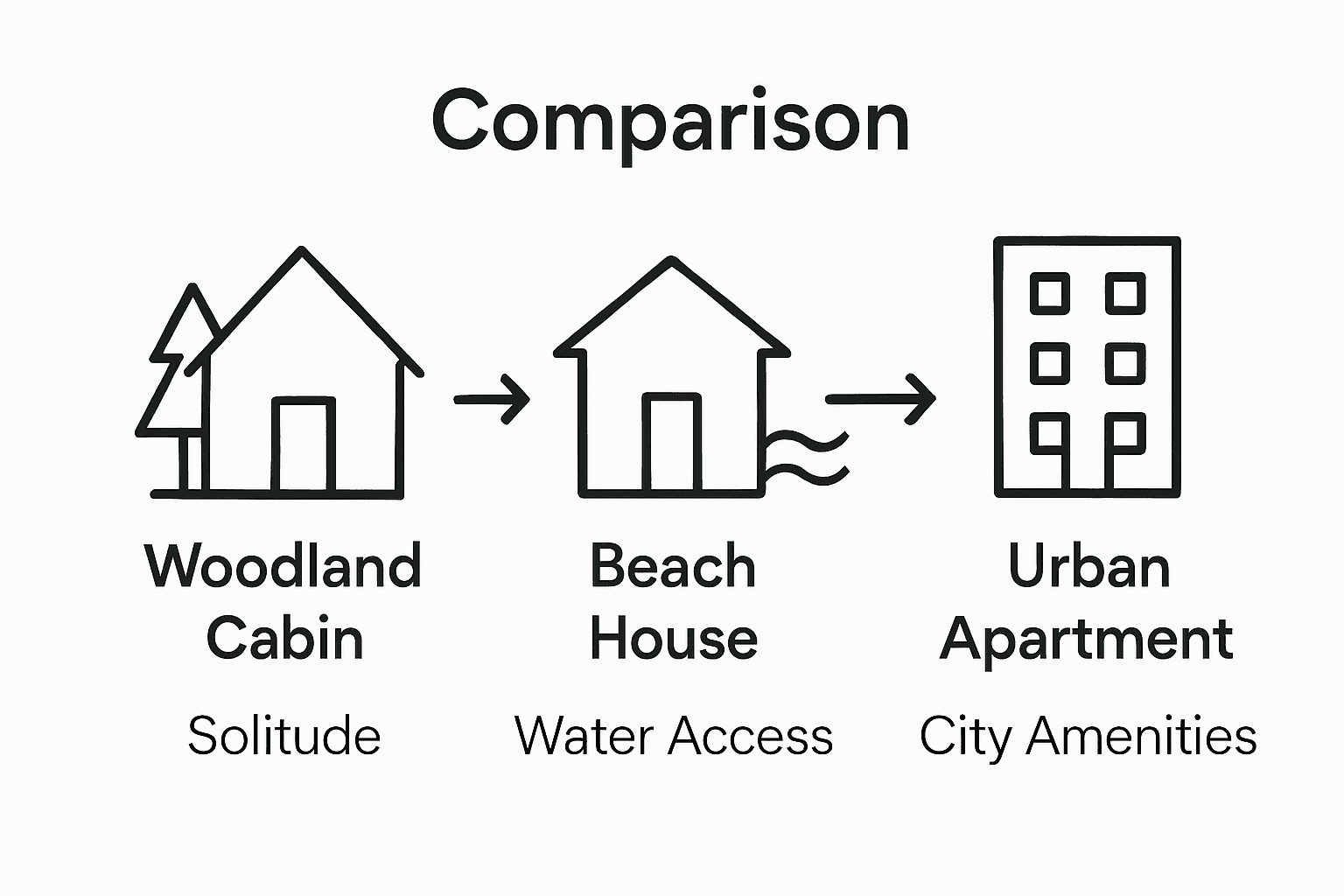
Urban vacation homes present a contrasting option, typically located in metropolitan areas or cultural destinations. Condominiums and city apartments serve travelers wanting convenient access to cultural attractions, dining, and entertainment. These properties often cater to business professionals, cultural enthusiasts, and those desiring short term stays in vibrant urban environments. They provide compact, efficiently designed living spaces that prioritize location and accessibility over expansive square footage.
Pro Tip: Consider your primary recreational interests and lifestyle preferences when selecting a vacation home type, as the property’s location and design can significantly impact your overall enjoyment and potential rental income potential.
Here’s a comparison of popular vacation home types and their ideal user profiles:
| Vacation Home Type | Typical Location | Key Appeal | Ideal Owner Profile |
|---|---|---|---|
| Cabin Retreat | Mountains, forests | Seclusion, nature immersion | Outdoor enthusiasts |
| Beach House | Coastal or lakefront | Water access, scenic views | Water sports lovers |
| City Apartment | Urban/cultural centers | Walkable amenities, culture | Business or culture seekers |
Key Features and Customization Options
Modern vacation homes are distinguished by their sophisticated architectural customization and technological integration, offering owners unprecedented flexibility in design and functionality. These properties go far beyond traditional residential structures, incorporating specialized features that enhance comfort, efficiency, and personal expression. Advanced design approaches now enable homeowners to create truly personalized spaces that reflect individual lifestyles, recreational preferences, and aesthetic sensibilities.

Technological customization has become a critical aspect of contemporary vacation home design. Smart home systems now provide comprehensive control over environmental settings, security, and entertainment infrastructure. Owners can implement voice-activated controls, automated climate management, and integrated security networks that can be monitored remotely through smartphone applications. These technological enhancements not only improve convenience but also increase property value and potential rental attractiveness.
Architectural customization options have expanded dramatically, allowing for highly personalized spatial configurations. Homeowners can now design multipurpose spaces that seamlessly transition between recreational and functional environments. Features like retractable glass walls, modular furniture systems, and adaptable indoor-outdoor living spaces enable unprecedented design flexibility. Some vacation homes incorporate specialized zones for specific activities such as home offices, fitness areas, art studios, or meditation spaces, transforming these properties into multifunctional personal retreats that extend far beyond traditional vacation accommodations.
Pro Tip: Prioritize adaptable design features and integrated technology when customizing your vacation home, focusing on solutions that enhance both personal enjoyment and potential future resale or rental value.
Legal Requirements and Permitting in Central Europe
Navigating the complex landscape of legal requirements for vacation home ownership in Central Europe demands comprehensive understanding of regional regulations and municipal ordinances. Each country within this region maintains distinct legislative frameworks governing property acquisition, residential usage, and short term rental permissions. Potential property owners must carefully research specific local statutes that can significantly impact investment potential, operational capabilities, and potential revenue streams.
Municipal regulations in Central European countries often impose nuanced restrictions on vacation home ownership and rental activities. Zoning classifications, property usage permits, and residential conversion approvals represent critical legal considerations that vary dramatically between jurisdictions. Some regions require explicit municipal permissions for transforming residential properties into vacation rental units, while others mandate specialized insurance coverage, periodic safety inspections, and comprehensive tax documentation for secondary property investments.
Tax implications represent another complex dimension of vacation home ownership in Central Europe. Different countries implement unique taxation strategies for secondary property investments, with some jurisdictions imposing additional property taxes, rental income taxes, and capital gains assessments. Potential investors must thoroughly understand local tax regulations, potential exemptions, and reporting requirements. Professional legal and financial consultation becomes essential for navigating these intricate regulatory environments, ensuring full compliance and minimizing potential financial risks associated with international property investments.
Pro Tip: Consult local legal professionals specializing in real estate and taxation before finalizing any vacation home investment in Central Europe, as regional regulations can create unexpected compliance challenges for international property owners.
Costs, Maintenance, and Tax Implications
Vacation home ownership involves a complex financial landscape that extends far beyond the initial purchase price. Total cost of ownership encompasses multiple financial dimensions, including initial acquisition expenses, ongoing maintenance costs, property management fees, and potential renovation investments. Prospective owners must develop comprehensive financial strategies that account for both predictable and unexpected expenditures associated with maintaining a secondary residential property.
Maintenance expenses represent a significant ongoing financial consideration for vacation home owners. Properties located in diverse geographical environments require specialized upkeep strategies, ranging from seasonal weatherproofing to regular structural inspections. Coastal properties might demand more frequent maintenance due to salt air corrosion, while mountain properties could require specialized winterization procedures. Professional property management services can help mitigate these challenges, typically charging between 8% to 15% of rental income for comprehensive maintenance and oversight.
Consider the differences in vacation home costs and maintenance factors by environment:
| Environment Type | Unique Maintenance Needs | Typical Annual Cost Factors |
|---|---|---|
| Coastal | Salt air corrosion, storm prep | Higher insurance, frequent cleaning |
| Mountain | Snow removal, winterization | Roof upkeep, seasonal heating |
| Urban | Security, building regulations | HOA fees, parking, regular repairs |
Tax implications for vacation homes present another intricate financial dimension. Property owners must navigate complex tax regulations that vary significantly between jurisdictions. Rental income, property depreciation, and capital gains represent critical tax considerations that can substantially impact overall investment performance. Some regions offer tax incentives for property improvements or energy efficiency upgrades, while others impose additional taxes on secondary residential properties. Strategic tax planning, potentially involving specialized real estate tax professionals, becomes essential for maximizing financial benefits and ensuring regulatory compliance.
Pro Tip: Create a dedicated financial reserve fund for unexpected maintenance and repair costs, aiming to set aside approximately 1-2% of the property’s total value annually to cover potential emergency expenses and routine upkeep.
Discover the Perfect Timber Frame Vacation Home Designed for Your Lifestyle
Choosing a vacation home involves many challenges from understanding legal requirements to factoring in maintenance costs and customization options. Whether you prefer a cozy cabin retreat, a serene beach house, or a modern city apartment, your dream vacation home deserves a sturdy and personalized structure that matches your vision. At Huvila Seppälä, we specialize in custom log houses, cottages, and villas made with authentic Finnish wood crafted to your unique plans. Our 65 years of expertise ensures reliable quality and fast delivery without hidden costs, making your vacation home investment both smart and fulfilling.
Take control of your vacation home project now and explore how our tailored wood structures can blend timeless craftsmanship with modern living. Visit Huvila Seppälä to learn more about our custom wooden villas and homes and start designing your personal retreat that fits perfectly within your budget and lifestyle. Don’t wait to transform your vacation home dreams into a lasting reality.
Frequently Asked Questions
What is a vacation home?
A vacation home is a secondary residential property owned for recreational purposes, distinct from a primary residence, often used for temporary escapes and relaxation.
What are the types of vacation homes available?
Vacation homes come in various types including cabin retreats, beach houses, and urban apartments. Each type caters to different recreational needs and settings, such as mountains, coastal areas, or city centers.
What are the common misconceptions about vacation home ownership?
Common misconceptions include the belief that vacation homes are only for the wealthy, and that maintenance requires constant personal involvement. Shared ownership models and professional property management can alleviate these issues.
What are the costs associated with owning a vacation home?
Costs include the purchase price, ongoing maintenance, property management fees, and potential renovation expenses. It’s crucial to create a financial strategy that accounts for these factors to ensure effective ownership.
Recommended
- Mökkirakentaminen Explained: Hyödyt, Vaihtoehdot ja Vinkit – Huvila Seppälä
- Rakennustyypit mökkirakentamisessa: kattava opas – Huvila Seppälä
- Mökki-rakennuslupien hankintaohje: Helppo vaiheittainen opas – Huvila Seppälä
- Miksi Räätälöity Hirsimökki: Täydellinen Opas Valintaan – Huvila Seppälä